Maintaining an open airway is critical in emergencies. When someone becomes unconscious, their tongue can block the airway. This prevents oxygen from reaching the lungs. Learning proper airway opening techniques can save lives. These skills are essential for anyone trained in CPR and emergency care.
Understanding Airway Opening Techniques
Airway obstruction is a leading cause of death in emergencies. The tongue is the most common culprit. When a person loses consciousness, their muscles relax. The tongue falls backward and blocks the throat. This stops air from reaching the lungs.
Two primary techniques exist to open blocked airways: the head tilt-chin lift and the jaw thrust maneuver. Both methods work by moving the tongue away from the throat. They create a clear path for air to flow.
Healthcare providers must know when to use each technique. The choice depends on whether spinal injury is suspected. Using the wrong method could cause serious harm.
The Two Primary Airway Opening Techniques
Healthcare providers and first responders use two main methods to open a patient’s airway:
Head Tilt-Chin Lift Maneuver
Call Us Now
Get the Best CPR Class in Columbus Today!
This is the most reliable method for opening airways in unresponsive patients. The technique works by moving the tongue away from the back of the throat.
Here’s how to perform it:
- Place one hand on the patient’s forehead
- Put your other hand under the chin
- Gently tilt the head back
- Lift the chin upward
Research shows this method works well in most cases. It’s easier to perform than other techniques.
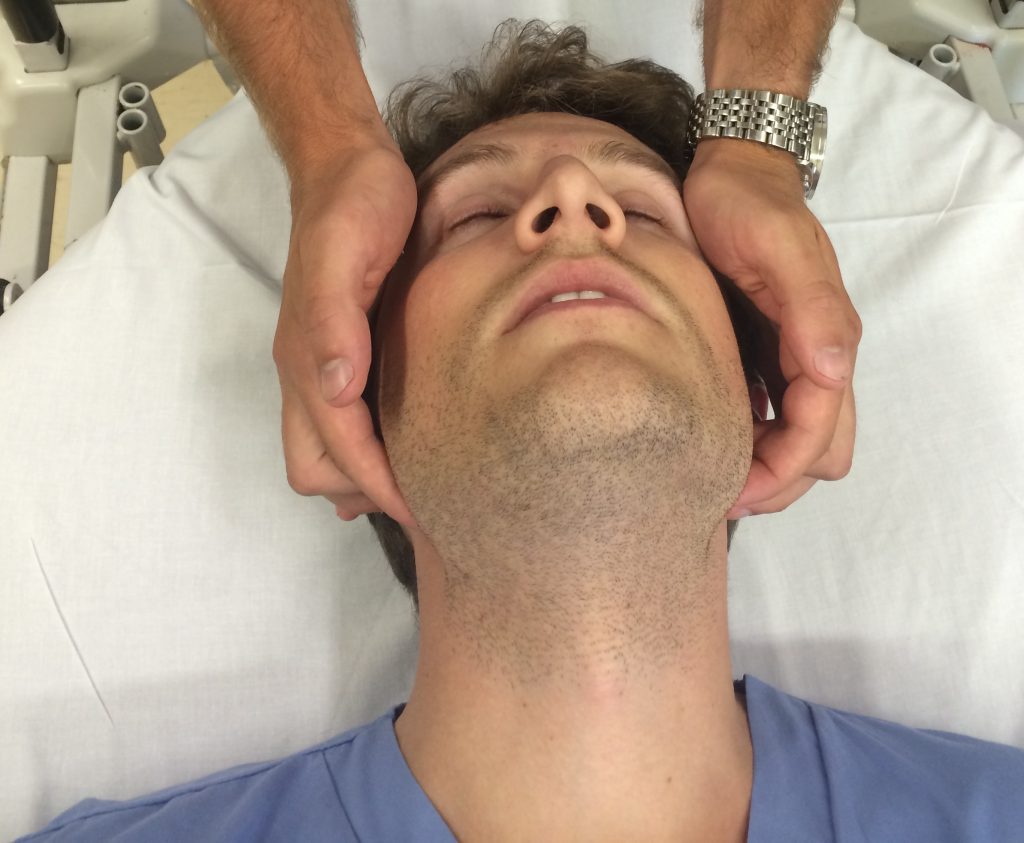
Jaw Thrust Maneuver
Medical professionals prefer this technique when neck injuries are suspected. The jaw thrust opens the airway while keeping the spine stable.
Steps to perform the jaw thrust:
- Stand at the patient’s head
- Place your palms on their temples
- Put your fingers under the jaw’s angles
- Lift the mandible upward and forward
- Keep the head in a neutral position
A 2024 study published in PMC compared three airway maneuvers. The research found that jaw thrust effectively opens airways without moving the cervical spine. This protects patients with potential neck injuries.
When to Use Each Airway Opening Method
The choice between techniques depends on the situation.
Use the head tilt-chin lift when:
- No neck injury is suspected
- The patient is unconscious
- You need quick airway access
- You’re performing CPR
Use the jaw thrust when:
- Cervical spine injury is possible
- The patient has head trauma
- You suspect neck problems
- Standard methods might cause harm
The American Heart Association’s 2025 guidelines emphasize high-quality airway management. Their research shows proper technique improves patient outcomes significantly.
Understanding the 3-3-2 Rule for Airways
The 3-3-2 rule helps predict difficult airways before intubation attempts. This assessment tool can prevent complications.
What the 3-3-2 Rule Measures:
- Three fingers between teeth: Place three fingers vertically between the patient’s incisors. If they don’t fit, intubation may be harder.
- Three fingers from chin to hyoid: Measure from the chin tip to the hyoid bone. Less than three fingers indicates limited space.
- Two fingers from the hyoid to the thyroid: Check the distance between the hyoid and the thyroid cartilage. Less than two fingers suggests difficulty.
According to StatPearls, approximately 1-3% of patients requiring endotracheal intubation face challenges due to difficult airways. The 3-3-2 rule helps clinicians prepare for these situations.
A 2015 study in the Irish Journal of Medical Science examined 732 patients. Results showed that the 3-3-2 rule effectively predicted difficult intubation. The research helps medical teams plan better.
Combining Airway Management Techniques
Advanced providers often combine multiple methods:
The Triple Airway Maneuver
This combines three actions:
- Head tilt
- Jaw thrust
- Open mouth
Research shows the triple airway maneuver provides the most reliable manual method for upper airway patency.
Airway Adjuncts
Sometimes manual techniques need support:
- Oropharyngeal airways prevent tongue obstruction
- Nasopharyngeal airways work when the gag reflex is present
- Bag-valve-mask ventilation delivers oxygen effectively
The 2025 AHA guidelines recommend waveform capnography to verify advanced airway placement. This monitoring tool provides continuous feedback on ventilation effectiveness.
Common Mistakes in Airway Opening
Avoid these errors:
- Pressing on soft tissues under the chin
- Excessive head extension
- Incomplete jaw displacement
- Moving the neck in trauma patients
- Forgetting to reassess airway patency
Studies show that proper training reduces these mistakes. Regular practice maintains skills.
Training Requirements for Airway Management
Healthcare providers need current certification. The American Heart Association updated its guidelines in 2025. These updates reflect the latest research.
Key training elements include:
- Proper hand positioning
- Correct force application
- Assessment techniques
- Recognition of difficult airways
- Use of monitoring equipment
Clinical Applications
Airway opening techniques apply in many situations:
Emergency Response
- Cardiac arrest victims
- Drowning incidents
- Drug overdoses
- Choking emergencies
Medical Settings
- Pre-surgical procedures
- Critical care units
- Emergency departments
- Ambulance transport
Special Populations
- Pediatric patients need modified techniques
- Obese patients require standard CPR approaches
- Elderly patients may have reduced neck mobility
- Trauma patients need spine protection
Research from 2024 confirms that CPR for adults with obesity should use the same techniques as for patients without obesity. This prevents hesitation during emergencies.
Take Action: Get Certified Today
Proper airway management requires hands-on training. Reading about techniques isn’t enough. You need practice with expert guidance.
CPR Columbus offers American Heart Association training courses. We provide initial certifications and renewals in:
- BLS for Healthcare Providers
- ACLS (Advanced Cardiovascular Life Support)
- PALS (Pediatric Advanced Life Support)
- CPR and First Aid
All our classes are stress-free and hands-on. You’ll learn airway opening techniques from experienced instructors.
Why Choose CPR Columbus?
- Official AHA training site
- Small class sizes
- Experienced instructors
- Flexible scheduling
- Same-day certification
Don’t wait for an emergency. Register for our AHA CPR course in Columbus today. Master life-saving airway techniques.
Need pediatric training? Our PALS class in Columbus covers specialized airway management for children. You’ll learn age-appropriate techniques.
Visit CPR Columbus now. Your training could save a life tomorrow.
Frequently Asked Questions
Q: What’s the difference between head tilt-chin lift, and jaw thrust?
A: The head tilt-chin lift moves the head backward while lifting the chin. It’s the most reliable method for most patients. The jaw thrust keeps the head stable while moving the jaw forward. Use it when a neck injury is suspected. Both techniques move the tongue away from the airway.
Q: Can I use the 3-3-2 rule in emergencies?
A: Yes. The 3-3-2 rule provides a quick assessment of potential intubation difficulty. Check if three fingers fit between the teeth, three fingers measure from the chin to the hyoid, and two fingers fit between the hyoid and the thyroid. This takes seconds and helps you prepare for complications. Emergency providers use this tool regularly.
Q: How often should I renew my airway management training?
A: The American Heart Association requires BLS, ACLS, and PALS renewal every two years. Guidelines are updated every five years based on new research. The 2025 AHA guidelines include significant changes. Stay current with regular training. Practice maintains your skills between certifications.