Two of the most important certifications in emergency medicine are ACLS and PALS. Both are issued by the American Heart Association (AHA). Both are designed to save lives. But they are not the same, and choosing the wrong one can leave you unprepared for real emergencies.
This article explains the key difference between ACLS and PALS, who needs each one, and whether both are required for your role. The goal is to help you make an informed decision — quickly and confidently.
What Is ACLS? A Quick Overview
ACLS stands for Advanced Cardiovascular Life Support. It is a clinical certification program developed by the American Heart Association. It is used by healthcare providers who respond to cardiac and cardiovascular emergencies in adult patients.
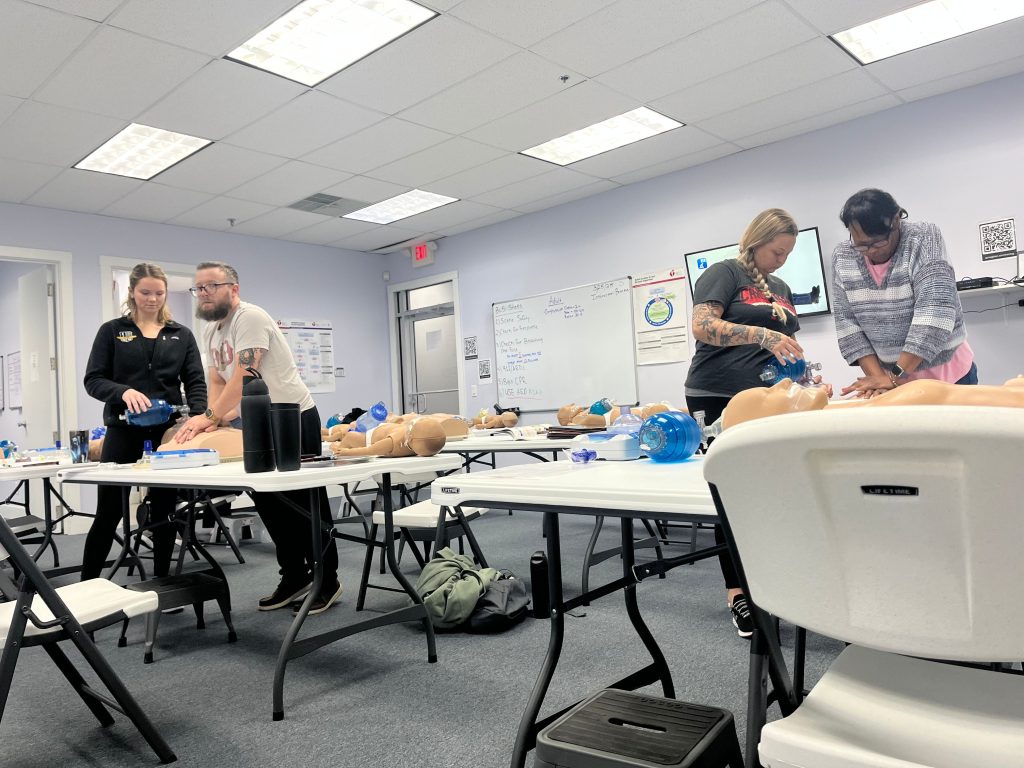
ACLS builds directly on Basic Life Support (BLS) skills. It adds more advanced interventions to what providers already know. The training is intensive and covers a wide range of life-threatening conditions.
Key skills taught in ACLS include:
- EKG interpretation and rhythm recognition
- Defibrillation and cardioversion techniques
- Advanced airway management and intubation
- Intravenous (IV) access and emergency pharmacology
- Management of cardiac arrest, stroke, and acute coronary syndromes
- Peri-arrest condition recognition and team leadership
According to the AHA, ACLS is designed for physicians, nurses, paramedics, and other providers who directly manage cardiopulmonary arrest or other cardiovascular emergencies. The certification is valid for two years and must be renewed to stay current.
Call Us Now
Get the Best CPR Class in Columbus Today!
What Is PALS? A Quick Overview
PALS stands for Pediatric Advanced Life Support. It is also an AHA certification, but it is designed for a very different patient population. PALS focuses on critically ill infants and children — not adults.
Children are not simply small adults. Their bodies respond to illness, injury, and cardiac arrest very differently. PALS addresses these differences directly. It teaches providers to recognize and treat respiratory failure and shock before cardiac arrest occurs, which is the most common pathway to pediatric cardiac arrest.
Key skills taught in PALS include:
- Pediatric assessment using the Systematic Approach Algorithm
- Recognition and management of respiratory distress and failure
- Identification and treatment of shock states in children
- Pediatric CPR, AED use, and two-rescuer infant/child resuscitation
- Arrhythmia recognition and management in pediatric patients
- Medication dosing and airway management for infants and children
PALS certification is geared toward nurses, physicians, paramedics, and emergency providers in pediatric wards, PICUs, and emergency departments. Like ACLS, the PALS provider card is valid for two years.
What Is the Difference Between ACLS and PALS?
The most important difference between ACLS and PALS is the patient population each one serves. ACLS is built for adult emergencies. PALS is built for pediatric emergencies. That single distinction shapes every element of the training.
The causes of cardiac arrest are different in adults and children. In adults, cardiac arrest is most commonly caused by a primary cardiac event — such as ventricular fibrillation or acute myocardial infarction. In children, cardiac arrest is most often caused by respiratory failure or shock that goes unrecognized and untreated. PALS is designed to catch these problems before they become fatal.
Drug doses, compression depths, defibrillation energy levels, and airway sizes are all different for children. Applying adult ACLS techniques to a child can cause serious harm. This is why two separate certifications exist — and why each one matters.
Here is a side-by-side summary of the core differences:
- ACLS targets adults; PALS targets infants and children
- ACLS focuses on cardiac events; PALS focuses on respiratory failure and shock
- ACLS uses adult drug doses and equipment; PALS uses weight-based pediatric protocols
- ACLS teaches stroke and acute coronary syndrome management; PALS does not
- PALS uses the ‘evaluate-identify-intervene’ framework; ACLS uses arrest-focused algorithms
Is PALS Different Than ACLS?
Yes. PALS is fundamentally different from ACLS in its focus, content, and clinical application. While both certifications share common foundations — such as BLS skills, team communication, and AHA-based protocols — they diverge significantly in approach and purpose.
PALS uses a systematic assessment model built around early recognition of deterioration. The goal is to prevent cardiac arrest, not just respond to it. This is because pediatric cardiac arrest carries a poor prognosis when not caught early. Research published in Circulation found that survival to hospital discharge after in-hospital pediatric cardiac arrest improved from 18.9% to 45.2% between 2000 and 2023 — a gain largely attributed to early recognition and high-quality CPR supported by PALS training.
ACLS, by contrast, is largely reactive. It is activated when a patient is already in cardiac arrest or a dangerous arrhythmia. The AHA recommends early ACLS intervention during the ‘peri-arrest’ phase — when warning signs suggest a crisis is near — but the training itself is built around managing deteriorating and arrested patients.
The course structures also differ. PALS training focuses on the Systematic Approach Algorithm and scenario-based learning around respiratory and shock emergencies. ACLS training revolves around cardiac arrest algorithms, rhythm recognition, and cardiovascular pharmacology. Both require hands-on skills testing and cannot be completed purely online.
Do I Need PALS If I Have ACLS?
In many cases, yes — especially if your clinical role includes caring for children. Having ACLS does not mean you are prepared to manage a pediatric emergency. ACLS training does not cover the unique physiology, drug dosing, or clinical algorithms needed for infants and children.
Many healthcare settings require both certifications. Emergency department nurses and physicians often need both because they treat patients of all ages. Paramedics and prehospital providers may also need both, depending on their service area and protocol requirements.
You likely need both ACLS and PALS if you work in:
- Hospital emergency departments that treat all age groups
- Pediatric intensive care units (PICU) — PALS required, ACLS may also be needed
- General ICUs or critical care units with mixed patient populations
- Transport medicine or prehospital emergency care
- Surgical or procedural settings where both adults and children are treated
If your practice is adult-only — such as a cardiac catheterization lab or adult ICU — ACLS is sufficient, and PALS is not required. If your role is exclusively pediatric, PALS is required, and ACLS may be optional. Always confirm requirements with your employer or licensing board before enrolling.
Is PALS Better Than ACLS?
Neither certification is ‘better’ than the other. They serve different purposes and address different patient populations. Comparing them directly is like asking whether a pediatric stethoscope is better than an adult one — the answer depends entirely on your patient.
PALS is more appropriate for pediatric emergencies. ACLS is more appropriate for adult emergencies. Both are evidence-based, regularly updated, and equally rigorous. Both certifications follow the same AHA research cycle and are revised as new science becomes available.
One area where PALS stands out is its emphasis on prevention. Because pediatric cardiac arrest is most commonly caused by respiratory failure, PALS is built around catching and treating the warning signs early. This proactive model can make a significant difference in outcomes. A 2024 study published in Medicina found a 65.1% mortality rate in pediatric in-hospital cardiac arrest cases — underscoring how critical early intervention truly is.
ACLS, on the other hand, covers a broader range of adult emergencies — including stroke, acute coronary syndrome, and complex arrhythmias — that PALS does not address. For providers in adult emergency medicine, ACLS offers a wider clinical scope.
What ACLS and PALS Have in Common
Despite their differences, ACLS and PALS share several core principles. Both are issued by the American Heart Association and are grounded in the same evidence-based science. Both emphasize teamwork, communication, and clear role definition during resuscitation efforts.
Shared features of ACLS and PALS include:
- Both require current BLS certification as a prerequisite
- Both are valid for two years and require renewal
- Both follow AHA guidelines updated through the ILCOR consensus process
- Both require in-person skills testing in addition to online modules
- Both emphasize high-performance team dynamics during emergencies
- Both are recognized and accepted by hospitals and employers nationwide
The AHA’s 2025 Guidelines for CPR and Emergency Cardiovascular Care updated recommendations for both adult and pediatric resuscitation. These updates apply to both ACLS and PALS courses. Staying current with recertification ensures your skills reflect the latest science.
Which Certification Is Right for You?
Choosing between ACLS and PALS — or deciding you need both — comes down to your patient population and workplace requirements. The right certification is the one that prepares you for the emergencies you are most likely to face.
Use this guide to help decide:
- Choose ACLS if you work primarily with adult patients in emergency, critical care, or cardiovascular settings
- Choose PALS if you work primarily with infants and children in pediatric or emergency settings
- Choose both if your role includes mixed-age patients or if you work in a general emergency department
- Check with your employer — many hospitals and health systems specify exactly which certifications are required by the unit
Both ACLS and PALS certifications are often provided by employers to newly hired staff. Most job offers require BLS on day one, with ACLS or PALS to be completed within three to six months of employment. If you are a new graduate or changing specialties, confirm the timeline and expectations with your employer before enrolling on your own.
FAQs: ACLS vs PALS
Q1: Who needs ACLS vs. PALS certification? ACLS is for healthcare providers who manage adult patients experiencing life-threatening cardiac emergencies, while PALS is designed for healthcare professionals who care for critically ill or injured infants and children.
Q2: Do I need BLS certification before taking ACLS or PALS? Basic Life Support (BLS) certification is the foundation for emergency care training and is required before completing either ACLS or PALS.
Q3: Is ACLS harder than PALS, or vice versa? Many healthcare professionals who have taken both will say that one isn’t necessarily more difficult than the other — they are simply two separate yet necessary certifications.
Conclusion & Call to Action
Understanding the difference between ACLS and PALS comes down to one core distinction: patient age and condition. ACLS is focused on adult patients, while PALS is dedicated to pediatric patients — and both build advanced, life-saving skills on top of the foundation provided by BLS. At CPR Columbus, an American Heart Association training site, we make it easy to get certified or renew — without the stress. Our hands-on classes are designed to fit your schedule and build real confidence in emergency response.
Ready to take the next step? Register for an ACLS class in Columbus or explore our full range of courses at CPR Certification in Columbus — including BLS, PALS, and CPR & First Aid. Spots fill fast, so sign up today!


